




Rationale:
A running sock is basically a piece of performance equipment: it manages friction, moisture, temperature, and fit at the exact point where your body meets the ground. You can have the right shoe on paper, but if your sock is sliding, bunching, or staying wet, you will feel it quickly. The best brands in the space all work on the same core problem: keep the foot stable and dry enough, reduce hot spots, and maintain comfort over distance.
This article will delve into my favourite pairs after years of testing, as well as some background on what makes an ideal sock, so that this can help you.
Materials: why fiber choice matters
Most quality running socks avoid standard cotton for a reason. Cotton absorbs moisture and holds onto it, which increases friction and softens skin, making blisters more likely. Instead, performance socks use synthetic fibers (like polyamide/nylon and polyester) because they move sweat away from the skin and dry fast. A touch of elastane (spandex) is usually there for stretch and shape retention, so the sock hugs the foot rather than collapsing mid-run.
You will also see natural performance fibers such as merino wool, especially in cooler conditions or for runners who want better temperature regulation. Merino can handle moisture without feeling clammy, helps reduce odor, and stays comfortable across a wide temperature range. The key is not “natural vs synthetic,” but how the blend behaves under sweat and friction: quick drying, low water retention, and a smooth feel against the skin.
Technologies: cushioning, compression, and friction control
Sock “technology” often looks subtle, but it is meaningful on long runs. Targeted cushioning in the heel and forefoot reduces pressure and impact feel, while thinner zones on top of the foot improve breathability. Many premium socks use zoned compression or support bands through the midfoot to reduce internal movement. Less movement inside the sock means less rubbing, and less rubbing means fewer hot spots.
Another major element is seam design and knit structure. Flat or linked toe seams help prevent irritation at the front of the foot, and different knit patterns (mesh panels, ribbing, denser terry loops) can be placed exactly where runners need ventilation or protection. Some socks also incorporate reinforced yarns in high-wear areas, improving durability without making the whole sock bulky.
Why a good sock is as important as a good shoe
Shoes handle cushioning, stability, and traction. Socks handle the interface. If that interface fails, it does not matter how advanced the foam or outsole is. A poor sock can create folds that rub, trap sweat that increases friction. Allow the foot to slide just enough to irritate the skin or destabilize the stride and you will know about it. A great sock, on the other hand, helps lock the fit you paid for in your shoes, keeps skin drier, and reduces the tiny annoyances that become real problems after 10, 20, or 40 kilometres.
Think of it like this: the shoe is the chassis, but the sock is the contact surface your foot feels. When the sock is right, you forget about it. When it is wrong, it becomes the loudest piece of gear you own.
Pre-dyed (knitted) vs Printed socks
I am quite picky when it comes to apparel and socks, so indulge me for a minute while we geek out on a small minutia that you may not have known about before.
A knitted sock is usually one colour, a deep colour and it does not change colour when you stretch it. The yarn is pre-dyed before the sock is knitted. Because no ink has to penetrate the yarn in the printing process, I find knitted socks offer better compression, less slipping and more uniform stretching. If there is any sort of pattern, it is usually stitched into the knitted sock.
Printed socks allow for fun patterns, are usually a little cheaper and the socks are stretchier. I find sizing less consistent with printed socks. As you stretch the sock, the colour becomes less intense. Usually the toe and the heel on printed socks are black, so that the printer can pick up where to print on the sock. A little quirk.
Knitted is all about craftmanship and printed is more about the vibe.
What do I look for when buying socks?
Comfort: I need socks to fit true to size, not stretch too heavily and not create any obvious chafing.
Breathability: As we approach summer, my merino socks are heading for the winter drawers and we are all about handling the heat here in Spain. Hot feet is not a vibe, so we are looking for engineered mesh on the upper of the foot and possibly the cuff as well. This criterion also works for sweat evaporation and drying after water crossings in trail running.
Durability: My preference here is for better socks that last longer as opposed to cheap and cheerful that you throw into an ever-growing trash heap.
With these 3 criteria in mind, let’s jump into my favourite sets. They are all longer, cycling length socks because I prefer them this way. The added compression combined with a little protection over the ankle when trail running works for me. It also just looks better.
The socks:
Incylence Running Renewed 97 Impact white €20.00
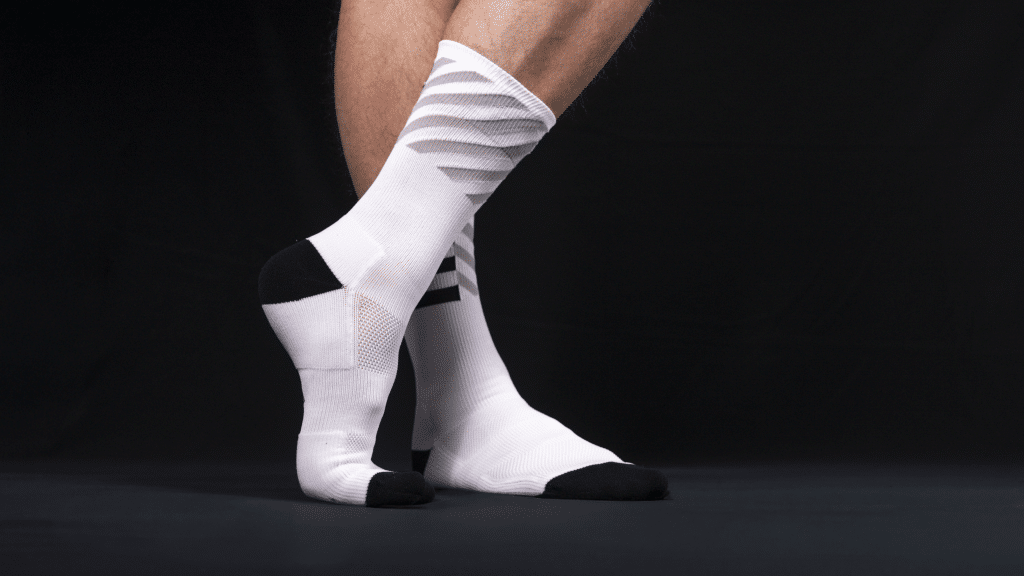
Made of 97% recycled yarns and fibres, this printed sock makes an impact aesthetically as well as being easy on the planet. These socks sit light and high with high stretch. I found the 43-46 ran a little long on my size 46 feet and that this caused a little friction as there was obvious movement of my feet in these and as we know, friction = blisters.
After just a few runs, they are already a little stretched, which is not unusual for a printed sock. There is a huge market for fun, bright printed socks and Incylence is right at the forefront in terms of design and aesthetics. The compressive element of these was almost zero, allowing for a lighter fit than some of the other socks below.
Comfort 3/5
Breathability 3/5
Durability 3/5
Saysky Combat High €20.00
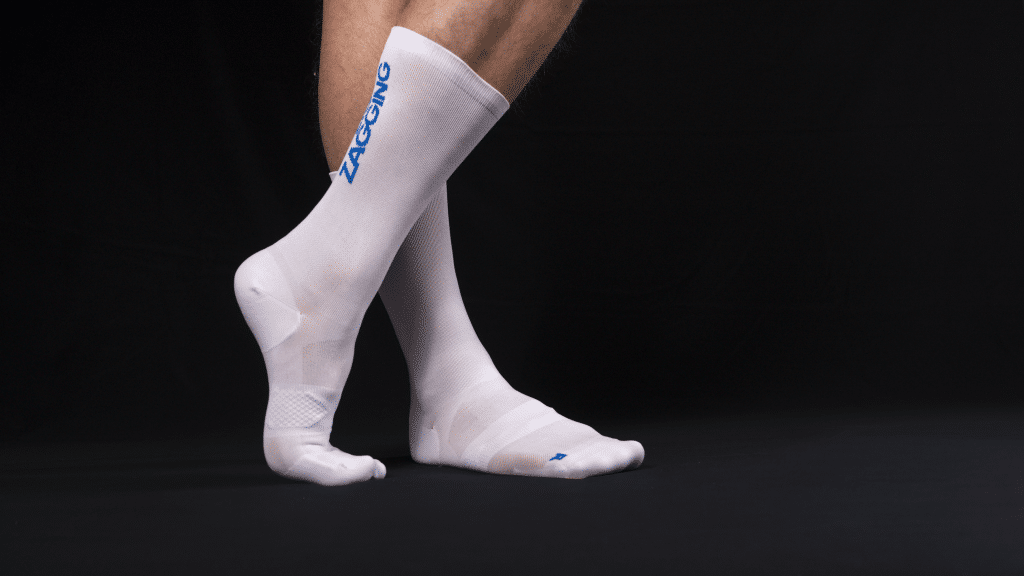
The ultra-thin Combat socks from Saysky are a premium, knitted sock with a heart on the sides to show your love for running. There are some engineered mesh areas on the foot, a very good 3D heel and a seamless toe for a blister-free ride.
Saysky have a winner here. I like the mild compression and premium feel of this knitted sock a lot. It also comes in a plethora of colours and designs if all white is not your ride. This is not the most breathable pair on test, but they are fine for everyday runs in most conditions. Their durability has also been excellent despite many washes.
Comfort 3/5
Breathabilty 3/5
Durability 5/5
Chance Running Lightweight Trail Sock €20.00
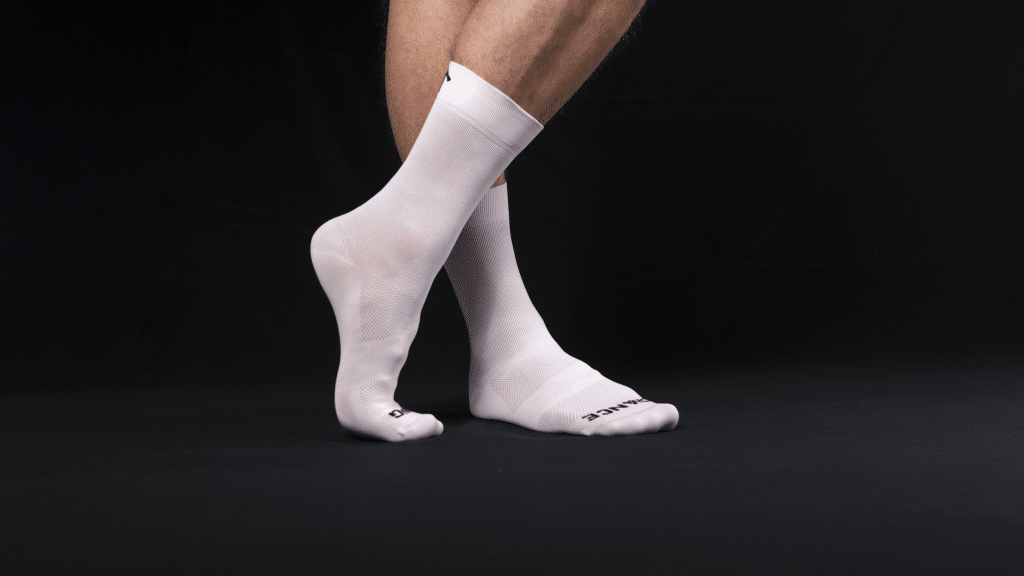
These bio-based, minimal socks are truly my go-to socks. The fabric is derived from castor beans, so yes, they are made from plants. These knitted socks are perfectly compressive, and the seamless toe area has given me blister-free runs even when crossing multiple rivers during an ultra-marathon.
I never think about these when using them because they are set and forget. These are my most durable socks, and I have put multiple sets of these through the ringer over the last 4 years. Their only drawback is that they are only available in black or white.
Comfort 5/5
Breathability 5/5
Durabilty 5/5
X-Socks Trail Run Discover €23.00
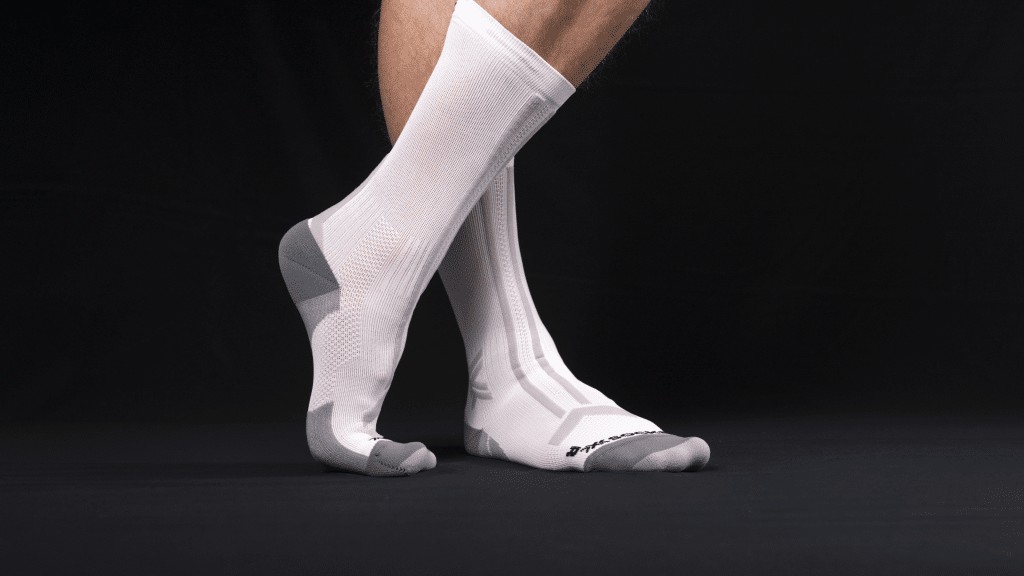
X-Socks have always been at the acme of sock technology. Air channels, a Lambertz-Nicholson Achilles tendon protector as well as padded heels and toes are only some of the tech in this sock. This sock looks medical, not sporty. Knitted to the highest standards, I truly enjoyed this set while they lasted. They ran a little warm as my only complaint, but this is consistent with most X-socks or X-Bionic product, which it still primarily designed for cooler climates.
Unfortunately, they suffered a fatal excursion when a nasty thorn bush out in the Gavarres National Park ripped the right sock to shreds. The X Socks felt compressive, comfortable and had they not been ripped in the forest, I am sure would have lasted many more miles.
Comfort 5/5
Breathability 3/5
Durability 4/5
Kiprun Run 900 €12.00
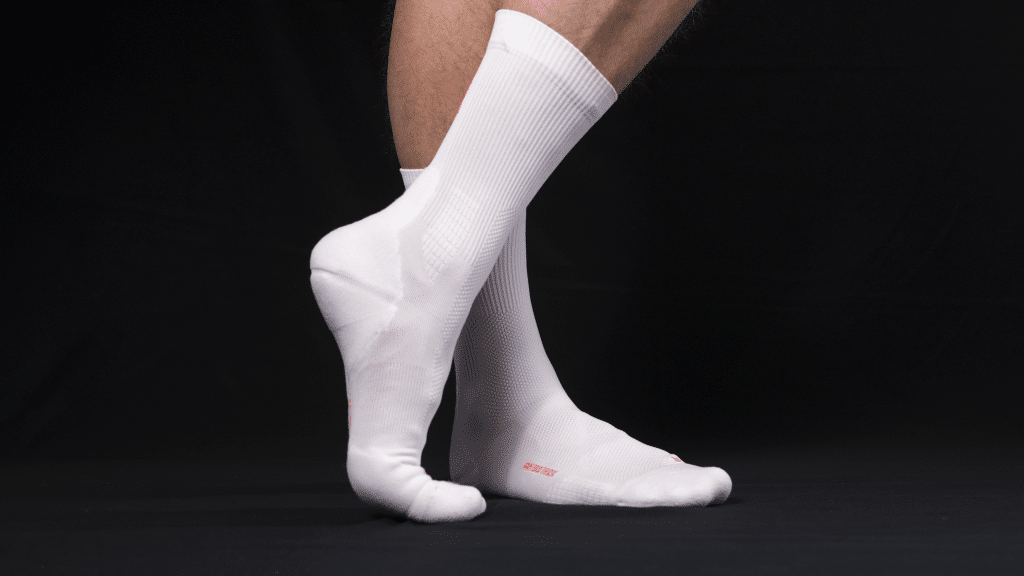
While a few people suggested I should try the Kiprun Run 500 socks (8.00€) I opted to try the more premium Run 900 for the simple fact that they are still 40% less than other premium knitted socks on the market. On paper, the Run 900 tick all the boxes.
Limiting irritation seamless toe and heel areas. Thicker areas on the toe and heel. Higher length for compression and comfort by using leading materials for breathability. I was excited to use these as soon as I saw them.
Unfortunately, they feel over-engineered and there are some quirks. My two socks are very different heights mid-run after starting at the same height. The thicker areas on the socks are noticeably thick, which creates a little bit of a hot foot scenario in the toes.
They are superb value compared to more expensive socks above, are available in some fun colours and despite stretching at different lengths, they seem pretty durable.
Comfort 3/5
Breathability 3/5
Durability 4/5
Overall Picks
The winner
My go to socks will remain the Chance Lightweight Trail socks. The only scenarios where I want something else is because Chance do not make a navy or a maroon version to match the shoes I am running in at that time. For me, it is a perfect sock and tough to fault them in any of the 3 criteria.
Value for Money
I am going to grab some Kiprun Run500 socks because at 4.00€ per set, they cannot be that different from the Run900, and I should have stuck with the advice and gone for the Run500 here. The crowd has spoken on this one!
Conclusion
As shoes have increased in price quite dramatically over the years, it feels like it is even more important to pick a sock that works for you. Try a few sets, based on your own foot geometry, ankle / lower leg size and find something that gives you nothing but blister-free rides. There are hundreds of options on the market and you are sure to find something that is perfect for you.

